
Light Requirements
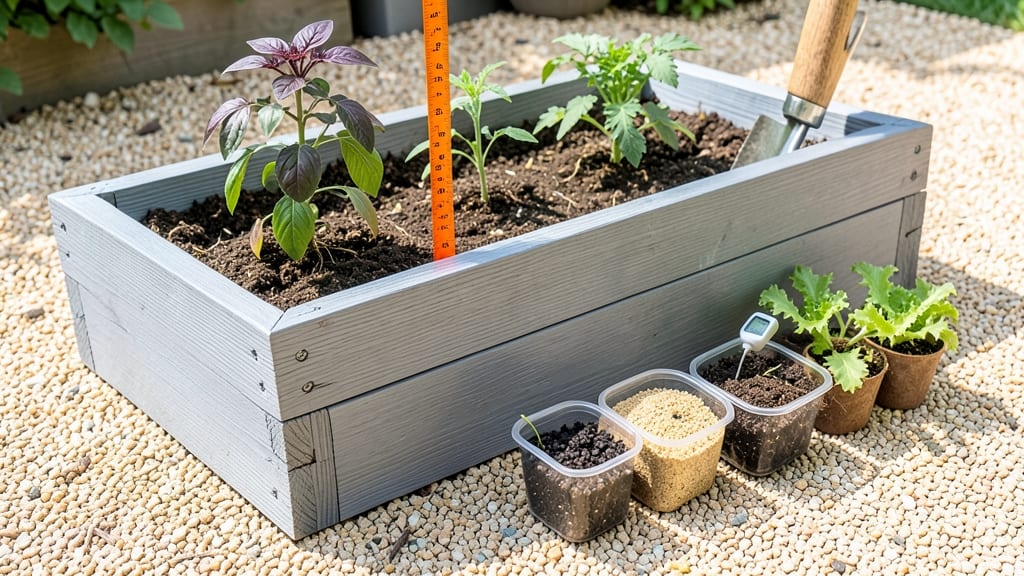
To determine how much soil for a raised garden bed, aim for 6 to 12 inches of high-quality soil—6 inches for root crops like carrots, 10-12 inches for deep-rooted plants (tomatoes, squash) or high-yield goals, and 4-6 inches for shallow-rooted herbs. Mix compost for fertility and drainage, adjusting depth based on plant types and soil composition.
Soil depth in raised beds isn't just about space—it's about creating the perfect environment for roots to thrive. 🌱 A deeper bed (10-12 inches) gives plants like tomatoes room to spread their roots, while shallower beds (4-6 inches) work perfectly for herbs that don't need as much depth.
The key is balancing organic matter (like compost) with proper drainage to prevent waterlogging, which can stunt growth. I've found that adding a layer of coarse sand or perlite to heavier soils helps maintain that ideal air-to-moisture ratio.
Don't forget to account for the bed's dimensions when calculating soil volume. A 4'x8'x12" bed requires about 1.5 cubic feet of soil per square foot—that's roughly 48 cubic feet total.
For larger beds or heavy feeders like corn, you might need even more to support vigorous growth. Mixing in 20-30% compost by volume boosts fertility without overwhelming the soil structure.
💡 In This Article
- Raised Garden Bed Soil Depth Science: Root Zones and Plant Growth Limits
- Raised Bed Soil Calculator: Customizing Mixes for Vegetables, Herbs, and Flowers
Raised garden bed soil depth science: root zones and plant growth limits
Plant roots don't just grow downward—they spread horizontally and vertically to access water and nutrients. Deep-rooted vegetables like tomatoes and squash need 10-12 inches of loose, aerated soil because their roots can extend 3-4 feet deep when given space.
Shallow-rooted plants like lettuce or basil thrive in just 4-6 inches because their roots max out at 12-18 inches below the surface. The science here is about root zone volume: deeper beds allow roots to explore more cubic inches of soil, which directly correlates with plant vigor and yield.
Drainage and compaction are the hidden factors that make soil depth critical. Heavy clay soils compact easily, reducing oxygen availability to roots—this is why raised beds often use 50-70% organic matter (compost, peat moss) to maintain porosity.
For example, a 6-inch bed of pure clay might suffocate carrot roots, while the same depth with 30% compost creates pockets of air for healthy growth. 🌱 The ideal soil mix should hold 20-30% air by volume, which deeper beds naturally achieve through layering techniques (like straw bales at the bottom).
Nutrient absorption follows a simple rule: more root mass equals more uptake. A tomato plant in a 12-inch bed can absorb 30-50% more nutrients than one in a 6-inch bed because its roots spread into a larger volume.
This is why deep-rooted plants show dramatic yield differences—studies show tomatoes in 12-inch beds produce 20-30% more fruit than those in shallower beds. The extra depth also helps during droughts by tapping into deeper moisture reserves.
Here's where organic matter becomes a game-changer: compost and aged manure don't just add nutrients—they create micro-pores that improve water retention and drainage.
A 6-inch bed with 20% compost might hold 50% more water than native soil, while a 12-inch bed with 30% compost could store enough moisture for 2-3 weeks without rain. This is why gardeners often layer 6 inches of topsoil + 6 inches of compost-rich mix in deeper beds.
Don't overlook the root-to-soil ratio: in a 4-inch bed, a carrot's roots might occupy 80% of the available space by maturity, leaving little room for new growth. In contrast, a 10-inch bed gives roots 30% more expansion room, reducing competition.
This is why root crops like beets and radishes often fail in shallow beds—their roots simply can't develop properly. 🥕 The solution? Build depth incrementally if space is limited, using 3-inch layers of soil-compost blends over time.
For high-yield goals, consider two-tiered beds: a 6-inch top layer for planting and a 4-inch bottom layer of coarse material (gravel, bark) for drainage. This mimics natural soil profiles where roots encounter different textures.
The key takeaway? Soil depth isn't just about space—it's about creating a three-dimensional growing environment that supports root exploration, nutrient access, and moisture balance.