
Light Requirements
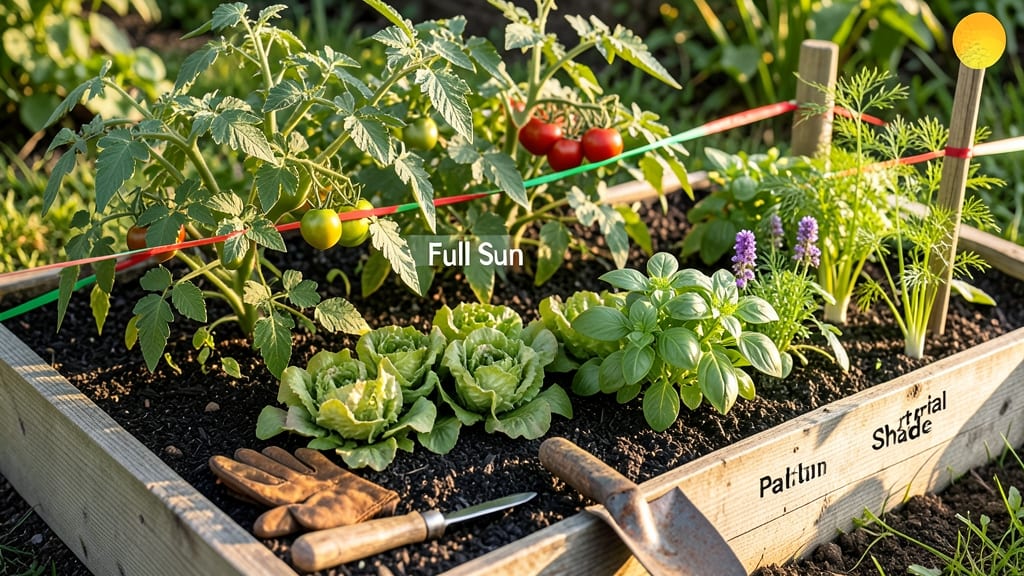
A veggie garden needs how much sun does a veggie garden need to produce healthy, flavorful crops—but not every plant craves the same amount.
Struggling to decide where to plant your veggies? Too little sun and your tomatoes won’t ripen; too much and your lettuce bolts prematurely. The right sunlight balance is the secret to a thriving garden—here’s exactly how much each crop needs to flourish.
Most vegetables thrive with full sun exposure, but some—like leafy greens and root crops—prefer partial shade. Understanding these differences means you can maximize space, avoid common mistakes, and grow a garden that’s both productive and low-stress.
Below, I break down the sunlight needs by crop type, share tips for adjusting your garden layout, and help you spot signs of sun stress before it’s too late. Let’s get your veggies growing strong!

Sunlight requirements by vegetable type: full sun vs partial shade vs low light needs
Understanding your garden's sunlight patterns is the first step to growing a productive vegetable harvest. Not all veggies need the same amount of light—some thrive in full sun, while others prefer partial shade or even low light conditions.
Getting this right means the difference between juicy tomatoes and bitter lettuce. Let me break down exactly what each of your favorite vegetables needs to flourish.
Most gardeners think of full sun as the gold standard, but that doesn't mean every plant belongs there. Tomatoes, peppers, and corn crave 6-8 hours of direct sunlight daily, while leafy greens and root vegetables often do better with less.
Even herbs like basil can scorch if left in the hottest afternoon sun. The key is matching your garden's microclimates to each plant's needs.
Here's a quick visual guide to help you plan your garden layout. This sunlight summary table shows exactly where to place each vegetable based on their light requirements, so you can avoid common mistakes like planting heat-loving crops in shady spots or bolting lettuce in too much sun.