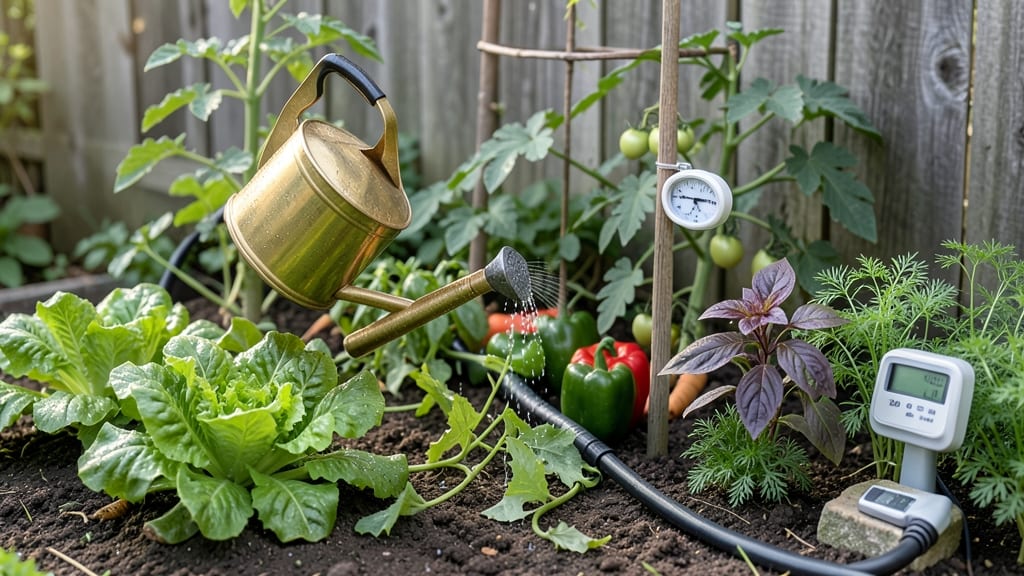
Watering your vegetable garden the right way means knowing how often to water vegetables without drowning or starving them—because guesswork leads to wasted effort and sad plants.
Overwatering or underwatering your 🥬 garden can mean the difference between a thriving harvest and wasted effort—yet most gardeners guess rather than follow science-backed schedules. The truth? Some crops like tomatoes need deep soaks every 2-3 days in summer, while others, like carrots, prefer a drier touch.
Soil type, season, and even the time of day play a huge role. Sandy soil drains fast, while clay holds moisture longer, and summer heat demands more frequent watering than spring.
I’ll break down the exact schedule your garden needs, from leafy greens to root crops, so you can stop second-guessing and start growing.
You’ll also learn how to spot overwatering (yellow leaves, mold) and underwatering (wilted plants, crispy edges) and adjust on the fly. By the end, you’ll have a foolproof system that keeps your veggies happy and your water bill in check.
💧
Frequency
Every 1-3 days (depending on weather)
Every 1-3 days
🌿
Water Need
High
Vegetables generally need consistent moisture
🌅
Best Time
Morning
Before 10 AM to reduce evaporation to reduce evaporation
🥛
Amount
1-2 inches per week (deep soak)
~2500-5000ml per sqft
Vegetable watering schedule by plant type: what each crop needs weekly
Watering your vegetable garden isn't a one-size-fits-all task—each plant has unique thirst levels. Tomatoes and peppers need consistent moisture, while squash and beans can handle drought better. Understanding these differences prevents wasted water and stunted growth.
I’ve grown both high-thirst crops like cucumbers and drought-tolerant varieties like kale, and the difference in care is night and day.
Deep-watering techniques are key—aim for 1-2 inches of water per week, delivered at the soil level, not just a sprinkle on leaves. This encourages deep root growth and prevents shallow, weak roots.
Most gardeners overestimate how much water their plants actually absorb, leading to either soggy soil or stressed plants. I learned this the hard way with my first zucchini patch, which wilted despite daily sprinkling.
Signs of overwatering include yellowing leaves, mold on soil, or plants that feel mushy when touched. Underwatering, on the other hand, shows as crispy leaf edges, wilting even after watering, or soil pulling away from pot edges.
Both extremes stress plants, but the fixes are simple: adjust frequency and improve drainage. I’ve seen lettuce bolt from thirst and carrots split from too much love—both avoidable with the right schedule.
Here’s a quick reference for 15+ common vegetables, organized by their watering needs. Use this as your guide to tailor your routine, whether you’re dealing with leafy greens that need frequent sips or root crops that prefer steady moisture.
| Vegetable |
Water Frequency |
Deep Watering Depth |
Signs of Thirst |
Best Time to Water |
| Tomatoes |
Every 2-3 days (daily in heat) |
1.5 inches |
Wilting leaves, dry soil 1" down |
Morning (6-9 AM) |
| Peppers |
Every 2-3 days |
1 inch |
Drooping, crispy edges |
Early morning |
| Cucumbers |
Daily (high thirst) |
2 inches |
Yellowing leaves, bitter taste |
Morning or evening |
| Lettuce |
Every 1-2 days |
0.5 inch |
Bolting (tall stems), bitter taste |
Late afternoon |
| Carrots |
Every 3-4 days |
1 inch |
Stunted growth, dry tops |
Morning |
| Squash |
Every 3-5 days |
1.5 inches |
Yellowing leaves, cracked fruit |
Early morning |
| Beans |
Every 2-3 days |
1 inch |
Wilting vines, dry pods |
Morning |
| Kale |
Every 3-4 days |
Seasonal adjustments: how climate and weather change your watering plan
Your vegetable garden’s watering needs aren’t static—they shift dramatically with seasonal changes, temperature spikes, and even humidity levels. What works in cool spring may drown your plants in sweltering summer, while fall rains can trick you into skipping water entirely.
Understanding these shifts is key to avoiding wilting or root rot.
I’ve gardened in USDA Zone 6a for years, and I’ve learned the hard way that a one-size-fits-all approach fails. For example, my tomatoes thrived with daily watering in July but nearly drowned when I kept the same schedule in humid August.
The solution? Adjust your watering plan based on weather patterns, not just calendar seasons.
-
1
Spring (April-May): Water every 2-3 days as soil warms. Focus on deep soaks to encourage root growth. Reduce frequency if rains exceed 1 inch/week.
-
2
Summer (June-August): Water daily or every other day in Zone 6a. Use drip irrigation to avoid evaporation. Check soil moisture early morning—if top inch is dry, water deeply.
-
3
Fall (September-October): Reduce to every 3-5 days as temps drop. Leafy greens need more water than root veggies—adjust based on crop type. Stop watering 2 weeks before first frost.
-
4
Winter (November-March): Water bi-weekly only if soil isn’t frozen. Evergreen veggies (like kale) need minimal moisture, while dormant plants (like potatoes) need none.
Don’t forget to factor in humidity—high humidity slows evaporation, so your garden may need less frequent watering in summer, even if temps are high.
I use a simple trick: stick a wooden skewer in the soil. If it comes out dry after 2 hours, water. If it’s damp, wait.
For USDA Zones 7-10, increase summer watering by 20-30% due to higher heat. In Zones 3-5, reduce fall watering earlier to prepare for frost. Always mulch to retain moisture—2-3 inches of straw can cut water needs by 30%.
Pro tip: Keep a watering journal to track adjustments. Note when you water, how much, and the weather. Over time, you’ll spot patterns—like how my garden needs 25% more water after a 90°F day—and refine your schedule like a pro. 💧
★★★★★5.0(7 reviews)
|