
Tools
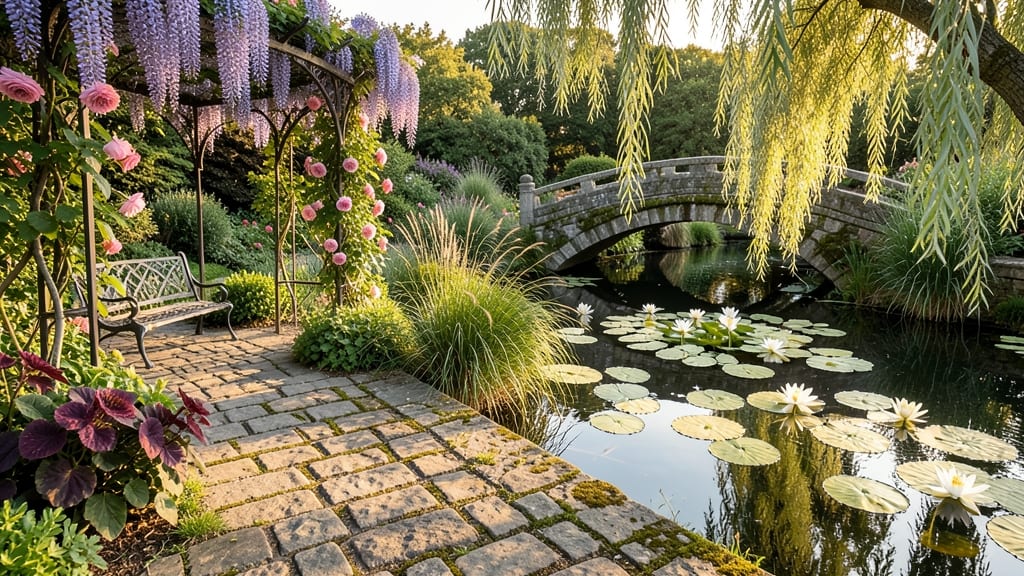
The pathways in Monet's garden at Giverny follow organic curves through vibrant plantings, combining gravel trails with brick walkways to create seamless movement through seasonal blooms. These winding routes emphasize natural flow, accessibility, and contrasting textures between garden sections.
The winding pathways at Giverny weren't just functional—they were Monet's way of creating an immersive experience. 🌿 The gentle curves guide visitors through ever-changing seasonal displays, while the varied materials (gravel, brick, and stone) add tactile interest at every turn.
What's fascinating is how these paths act as visual connectors, tying together different garden zones without disrupting the natural landscape.
Monet's approach to pathway design focused on three key principles: accessibility (ensuring all areas were reachable), texture contrast (combining rough gravel with smooth brick), and seasonal transitions (guiding visitors through blooming periods).
The result was a garden where every step felt like a discovery, with pathways serving as both structural elements and artistic features.
💡 In This Article
- How Monet’s Pathways Create Visual Flow in Garden Design
- Adapting Monet’s Garden Pathways to Modern Landscapes
How Monet’s pathways create visual flow in garden design
Monet’s pathways at Giverny weren’t random—they were carefully engineered to direct the eye and foot through a choreographed dance of color and texture. 🌿 The signature S-shaped curves (like the famous "Japanese Bridge" approach) create a sense of rhythm, making visitors feel like they’re floating through the garden rather than walking in straight lines.
These organic bends force slower movement, allowing time to appreciate the seasonal transitions—from early spring’s delicate crocuses to summer’s bold irises and autumn’s fiery maples.
The material choices were equally intentional: gravel paths (like those near the water lily pond) provide a rustic, permeable surface that blends with the natural terrain, while brick walkways (such as the ones in the rose garden) offer a structured contrast.
The width varies too—narrower paths (2-3 feet) guide visitors through dense plantings, while wider alleys (4-5 feet) open up vistas, like the grand approach to the Japanese Bridge. This play with scale creates visual depth, making the garden feel both intimate and expansive.
What’s often overlooked is how Monet used elevation shifts to enhance perspective. The pathways gently rise and fall, creating natural focal points where the view changes—like the sudden drop near the water lily pond or the subtle incline toward the rose garden.
These shifts aren’t just for aesthetics; they’re functional too, preventing water pooling and allowing drainage. The result? A garden that feels alive, where every step reveals something new, whether it’s a hidden bench, a burst of color, or a glimpse of the river beyond.
The real magic happens at the intersection of hardscape and softscape.
Monet placed pathways to frame plantings strategically—like the gravel paths that wind through the wisteria tunnels, where the vines spill over the edges, or the brick walkways that lead to the water lilies, where reflections blur the line between path and pond.
This interplay of man-made and natural elements is what makes the garden feel both structured and wild. The pathways don’t just connect spaces; they elevate the experience of being immersed in nature.
Take the Japanese Bridge pathway, for example. The winding gravel trail forces visitors to slow down, creating anticipation as they approach the bridge. The moment they cross, the view opens up to the water lilies, a visual payoff that rewards patience.
This principle—of guiding the eye and foot—is what separates Monet’s garden from a typical landscape. It’s not just a collection of plants; it’s a curated journey where every material, curve, and elevation shift serves a purpose.
For gardeners looking to replicate this effect, start with the path’s role in storytelling. Ask: Where do you want visitors to linger? What should they discover next?
Monet’s genius was in making the pathway itself an active participant in the garden’s narrative—not just a means to get from point A to B, but a character in the scene. 🌸