
Tools
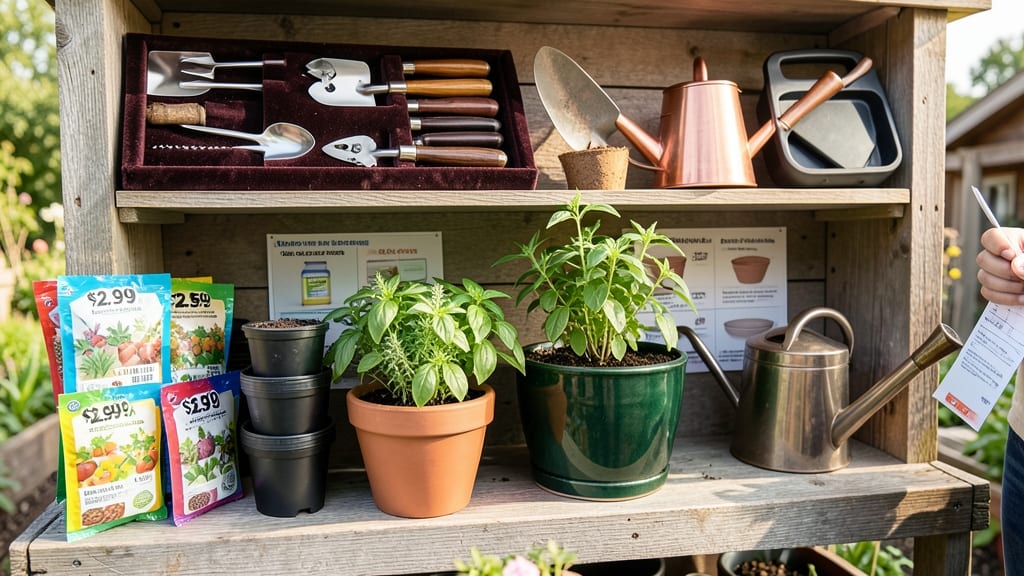
The price of a garden's total cost depends heavily on its scale, soil preparation, and the tools you'll need, with budgets starting as low as $100 for a modest DIY project and climbing past $5,000 for expansive, professionally designed landscapes featuring high-quality soil and irrigation systems. Your final price will shift based on plant selections, watering solutions, and whether you handle the work yourself or hire help.
The price of garden starting doesn't require a fortune, but costs can escalate quickly when you factor in premium soil blends or automated irrigation. 🌱 For example, a 10x10-foot vegetable patch might only need $50 in basic tools and $150 in organic compost, while a 50x50-foot ornamental garden with custom hardscaping could easily exceed $3,000.
The biggest savings come from choosing perennials over annuals and investing in quality tools that last years—like a stainless steel pruner or a heavy-duty wheelbarrow—rather than disposable alternatives.
Even small gardens benefit from smart planning. A 5-gallon potted herb garden costs under $50 to start, but adding a drip irrigation kit ($30-$80) can save time and water.
Meanwhile, large-scale projects often require permits and professional grading, which can add thousands to the bottom line. 💰 The key is balancing your vision with practicality—what you save on materials today could fund bigger upgrades tomorrow.
💡 In This Article
- Key Factors Influencing Garden Costs by Type
- Budget-Friendly vs. Premium Garden Tool and Supply Lists
Key factors influencing garden costs by type
Soil preparation often accounts for 30-50% of a garden's total cost, depending on whether you start with native soil or invest in amendments.
Native soil may require $0.50-$2 per square foot in lime or sulfur to adjust pH, while premium topsoil or compost blends can cost $5-$20 per cubic yard.
For example, a 100-square-foot garden might need 2 cubic yards of compost, adding $100-$400 to your budget if you skip the DIY route of mixing leaves and kitchen scraps over months.
Plant selection creates another major cost swing—starting from seeds saves 70-90% compared to buying mature plants. A 6-pack of tomato seedlings costs $3-$6, while 100 heirloom seeds run $2-$5.
Perennials like lavender or daylilies cost $5-$20 each but return for years, while annuals like marigolds ($1-$3 per plant) require yearly replanting. 🌿 Even "free" cuttings from neighbors need rooting hormone ($5-$10) and sterile soil to avoid disease.
Irrigation systems reveal the biggest budget gaps between DIY and professional setups. A simple soaker hose costs $10-$30 for a 50-foot run, while a drip irrigation kit with emitters and timer adds $50-$150.
Automatic sprinklers start at $200 for basic models but can exceed $1,000 with smart controllers and underground piping. The tradeoff? Manual watering takes 10-30 minutes daily in summer, while automated systems save time and reduce water waste by 30-50%.
Labor costs become the wild card in larger gardens. DIYers spend $50-$200 on tools (shovel, rake, gloves), while hiring a landscaper for 500 square feet of bed prep and planting averages $1,500-$3,500. The difference?
Professionals use skid-steer loaders ($300/hour) and access to bulk mulch discounts, while DIYers pay retail for 2 cubic yards of mulch ($60-$120). Even "simple" tasks like installing a 10-foot trellis cost $20-$50 in materials but require 2-4 hours of labor at $35-$75/hour if outsourced.
Climate plays a hidden role in costs too. Gardens in USDA Zone 5 (colder winters) need $50-$200 in frost blankets or row covers, while Zone 10 gardens may invest in $100-$300 shade cloth to protect plants from intense sun. The science behind this?
Soil microbes thrive at 50-77°F—colder zones require warmer soil amendments like straw or black plastic to kickstart growth. 🌡️ In hot climates, mulch isn't just decorative; it reduces soil temperature by 10-15°F, saving water and preventing root burn.
Here's where most budgets get derailed: unexpected upgrades. What starts as a $500 herb garden becomes $1,200 after adding a $300 raised bed kit, $200 in drip irrigation, and $150 in decorative stones.
The lesson? Allocate 10-20% of your budget for contingencies—whether it's replacing broken tools, fixing drainage issues, or upgrading to better-quality plants after your first season's failures.