
Tools
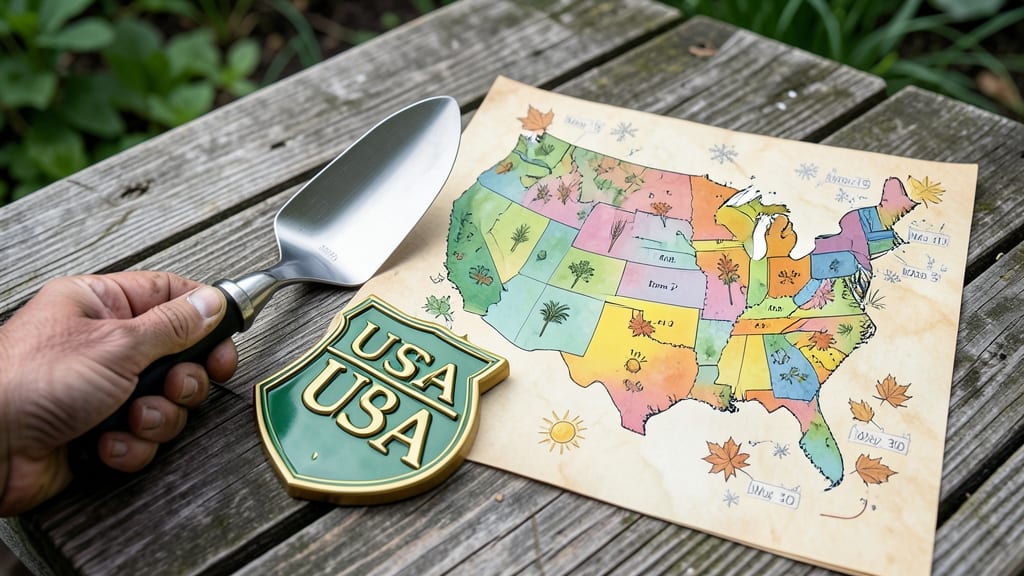
US gardening zones map average annual minimum temperatures across the country, helping you choose plants that survive and thrive in your specific climate range from 1 to 13.
These zones, developed by the USDA, are based on the average lowest winter temperatures in your area, which directly impacts which plants will survive. 🌱 For example, a Zone 5 plant won't make it through a Zone 8 winter, while a Zone 9 plant might struggle in Zone 4.
The system helps gardeners avoid costly mistakes by aligning their plant selections with their local climate conditions.
Beyond just survival, understanding your zone also affects bloom times, growth rates, and overall plant health.
If you're unsure where to start, the USDA's interactive map lets you plug in your zip code to find your exact zone—plus, you can adjust for microclimates like sunny south-facing walls or shaded garden nooks that might shift your effective growing conditions.
💡 In This Article
- How USDA Plant Hardiness Zones Work and Why They Matter
- Finding Your Zone and Adjusting for Microclimates
How USDA plant hardiness zones work and why they matter
The USDA Plant Hardiness Zone System divides the country into 13 zones based on the average annual minimum winter temperatures, measured over a 30-year period. Each zone represents a 10°F range—so Zone 5 spans -20°F to -10°F, while Zone 9 covers 20°F to 30°F.
These temperatures are critical because most plants can't survive if exposed to colder extremes than their zone rating. For example, a Zone 3 shrub like the Siberian pea shrub (which handles -40°F) would freeze solid in a Zone 7 winter (0°F to 10°F). 🌡️
The system also correlates closely with first and last frost dates, which are essential for determining planting windows.
A Zone 6 area (with -10°F to 0°F minimums) typically has a shorter growing season than Zone 8 (10°F to 20°F), meaning tender plants like tomatoes or peppers need to be started indoors earlier.
The USDA calculates these zones using data from thousands of weather stations, ensuring accuracy down to the county level. This precision helps gardeners avoid costly mistakes like planting frost-sensitive oleanders in Zone 4 or struggling with citrus trees in Zone 5.
What most people don't realize is that zones aren't just about survival—they influence plant health year-round.
A Zone 9 plant like a bougainvillea might grow slowly in Zone 7 because it's constantly pushing its temperature limits, while a Zone 3 plant like a Russian olive could become stressed in Zone 9 due to summer heat.
The system accounts for these nuances by considering both cold hardiness and heat tolerance, ensuring plants thrive—not just survive—in their environment. 🌿
Here's what happens when you ignore zones: Plants may exhibit stunted growth, poor flowering, or even die back to the ground. For instance, a Zone 5 hydrangea planted in Zone 9 might produce fewer blooms because it's working harder to adapt.
Conversely, a Zone 9 palm tree in Zone 4 would likely perish within weeks of the first hard freeze. The zones act as a baseline for plant selection, but they're just the starting point—local conditions often require further adjustments.
For a real-world example, consider roses. David Austin's English roses, bred for cold hardiness, thrive in Zones 4-9, while Knock Out roses (a hybrid) handle Zones 4-11. The difference? The Knock Out's genetic resilience to temperature swings.
This is why nurseries often label plants with both zone ranges and specific care notes—like "protect from wind in Zone 5" or "needs winter mulch in Zone 6." The zones provide the framework, but your local microclimate adds the fine details. 🌹
The science behind the zones involves complex data analysis, including historical temperature trends and geographic variations. For example, coastal areas (like Zone 9b in San Diego) often have milder winters than inland zones at the same latitude due to ocean currents.
This is why the USDA updates the map every 10 years—climate change is shifting zones northward and upward in elevation. Understanding these shifts helps gardeners future-proof their landscapes. 🌍