
Planting
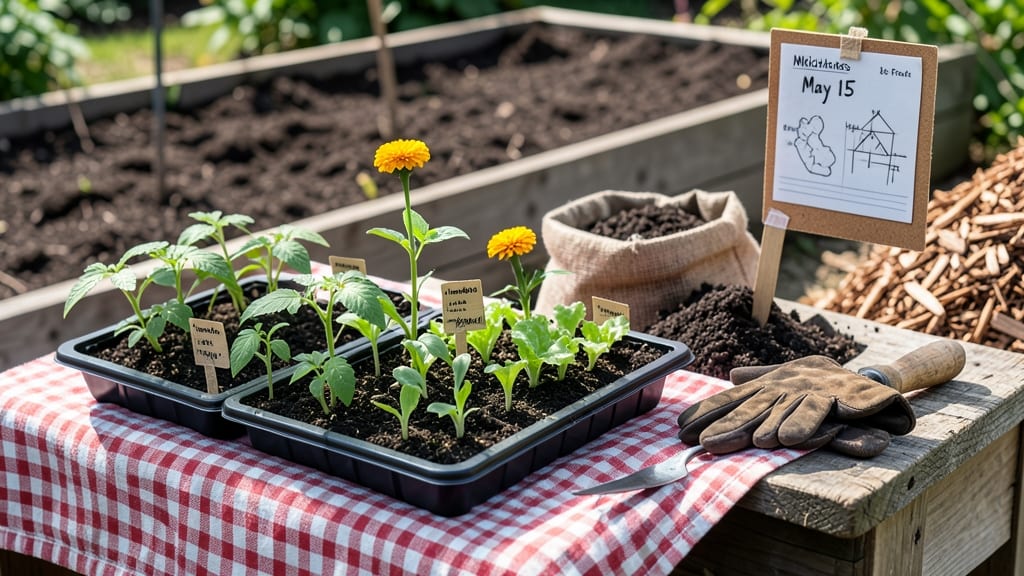
You can plant your garden in Michigan once the last frost has passed and soil temperatures hit 50°F consistently 🌱—typically between mid-April and late May, depending on your region.
Michigan’s unpredictable spring weather can leave even experienced gardeners guessing—plant too early, and frost will strike; too late, and you’ll miss peak harvests. But with precise frost-free dates and crop-specific timelines, you can master Michigan’s gardening window for a bountiful season.
This guide breaks down the best planting windows for cool-season crops like spinach and peas (plant as early as March in some zones) versus warm-season favorites like tomatoes and peppers (wait until after May 15).
You’ll also discover how to use soil thermometers, row covers, and local frost data to stretch your season—plus a checklist for protecting tender seedlings when late frosts sneak in.
Michigan’s frost-free dates by region: key planting zones and last frost timelines
Michigan’s USDA Hardiness Zones 5b-6a create a diverse gardening landscape, where last frost dates can vary by 3-4 weeks between regions. Understanding your specific planting zone and historical frost patterns is the key to timing your garden for success.
Whether you're in the Upper Peninsula, Northern Lower Peninsula, or Southern Michigan, knowing these dates helps you avoid frost damage while maximizing your growing season.
For most Michigan gardeners, the average last frost date falls between mid-April and early May, but these dates shift dramatically depending on your location. The Upper Peninsula typically sees its last frost around May 15-20, while Southern Michigan often reaches frost-free conditions by April 20-25.
These variations mean a 4-week difference in when you can safely plant warm-season crops like tomatoes and peppers.
To fine-tune your planting schedule, I recommend using local weather tools like the Michigan State University Extension’s Frost/Freeze Probability Maps or the National Weather Service’s climate data. These resources provide historical frost dates for your specific zip code, helping you account for microclimates in your area.
For example, a south-facing slope might warm up 1-2 weeks earlier than a low-lying valley, giving you a longer planting window.
Here’s a quick reference for Michigan’s three main gardening regions, including USDA Zones, average last frost dates, and frost-free growing seasons:
| Region | USDA Zone | Avg. Last Frost | Frost-Free Days | Key Planting Window |
|---|---|---|---|---|
| Southern Michigan | 6a | April 20-25 | 150-180 days | Mid-April (cool crops) to May 10 (warm crops) |
| Northern Lower Peninsula | 5b-6a | April 25-May 5 | 130-160 days | Late April (cool crops) to May 15 (warm crops) |
| Upper Peninsula | 4b-5b | May 15-20 | 100-130 days | Late April (cool crops) to May 25 (warm crops) |
If you’re planting cool-season crops like lettuce, spinach, or peas, you can often start them 4-6 weeks before your average last frost date. These hardy plants can tolerate light frosts and may even thrive in cooler temperatures.
However, for warm-season crops like tomatoes, peppers, and cucumbers, you’ll need to wait until after your last frost date to transplant seedlings or direct-sow seeds.
To stay ahead of Michigan’s unpredictable spring weather, I recommend using row covers or cold frames to extend your planting window by 2-3 weeks.
These protective tools allow you to plant warm-season crops earlier in the season, giving them a head start before the soil and air temperatures stabilize.
For example, in Southern Michigan, you might use a row cover to plant tomatoes as early as April 15, even if the average last frost isn’t until April 20.
Another critical factor is soil temperature. Most warm-season crops require soil temperatures of at least 50°F to germinate properly. You can monitor soil temperature with a soil thermometer or check local agricultural weather stations for real-time data.
In Northern Michigan, where soils warm more slowly, you might need to wait until mid-May to plant heat-loving crops like squash or beans, even if the air temperature feels warm.
First-time gardeners often make the mistake of relying solely on calendar dates rather than weather patterns. Instead of guessing, I suggest marking your calendar with the historical last frost date for your area and then adding a 2-week buffer for safety.
For instance, if your last frost is typically May 1, wait until May 15 to plant tender seedlings like basil or eggplant. This extra caution can save you from frost damage and lost plants.
For those in Southern Michigan, where the growing season is longer, you can even experiment with succession planting to extend harvests. Plant fast-growing crops like radishes or lettuce every 2 weeks from April through June to ensure a continuous supply.
Meanwhile, in the Upper Peninsula, focus on early-maturing varieties
Best planting schedule for Michigan crops: cool vs. warm season vegetables
Michigan gardeners know timing is everything—cool-season crops like spinach and kale thrive in chilly weather, while tomatoes and peppers need warm soil to sprout. The key? Planting at the right time ensures your garden avoids frost damage and maximizes yields.
For Michigan’s USDA Zones 5b-6a, this means starting cool crops early and waiting for soil warmth before planting heat-lovers.
I’ve organized this schedule by frost sensitivity, so you can see which crops to sow in early spring, which to transplant after last frost, and how to extend harvests with succession planting.
Whether you’re in Detroit or Traverse City, these timelines align with Michigan’s average last frost dates (April 15–May 15) and first frost (October 1–15).
🌱 Comparison Table: Cool vs. Warm Season Planting in Michigan
| Crop Type | Planting Window | Transplant Window | Succession Planting | Harvest Window |
|---|---|---|---|---|
| Cool Season | March–April (direct sow) or April–May (transplant) | April 15–May 15 (after last frost) | Every 2–3 weeks until July 1 | May–October (some, like spinach, bolt in heat) |
| Spinach | March–April (early varieties) | April 15–May 1 | Every 2 weeks until June 15 | May–July (harvest young leaves) |
| Lettuce | March–April (cold-hardy varieties) | April 1–May 15 | Every 3 weeks until August 1 | May–September |
| Peas | April–May (soil at 40°F+) | April 15–May 10 | None (bolt in heat) | June–July |
| Warm Season | After last frost (soil 60°F+) | May 15–June 15 | Every 2–3 weeks until August 1 | July–October |
| Tomatoes | Transplant only (start indoors March 1) | May 15–June 1 | None (long season needed) | July–October |
| Peppers | Transplant only (start indoors February 1) | May 20–June 10 | None (slow to mature) | August–October |
| Beans | Direct sow after soil warms (60°F+) | May 15–June 15 | Every 2 weeks until July 15 | July–September |
| Cucumbers | Direct sow or transplant | May 20–June 10 | Every 3 weeks until July 30 | July–September |
For cool-season crops, I recommend starting seeds indoors in March or direct-sowing as soon as soil is workable (usually late March–April). These plants tolerate light frosts, so don’t wait for perfect weather—spinach and kale can handle 20–25°F! Use row covers if late frosts threaten after transplanting.
Warm-season crops like tomatoes and peppers need patience. I always start these indoors 8–10 weeks before last frost (so early February–March for Michigan). Harden off seedlings before transplanting after May 15, when soil temperatures consistently stay above 60°F.
For succession planting, try fast-growing crops like bush beans or radishes every 2–3 weeks to keep harvests rolling.
Pro tip: Use Michigan State University’s Garden Tool to track your local frost dates—it’s a game-changer for adjusting timelines. And if summer heat arrives early, prioritize shade cloth or drip irrigation to protect tender seedlings from stress.
With this schedule, you’ll avoid the common pitfalls of Michigan gardening—frost damage to early plants or bolting in heat-sensitive crops. Happy planting, and may your harvests be bountiful! 🌱