
Plants
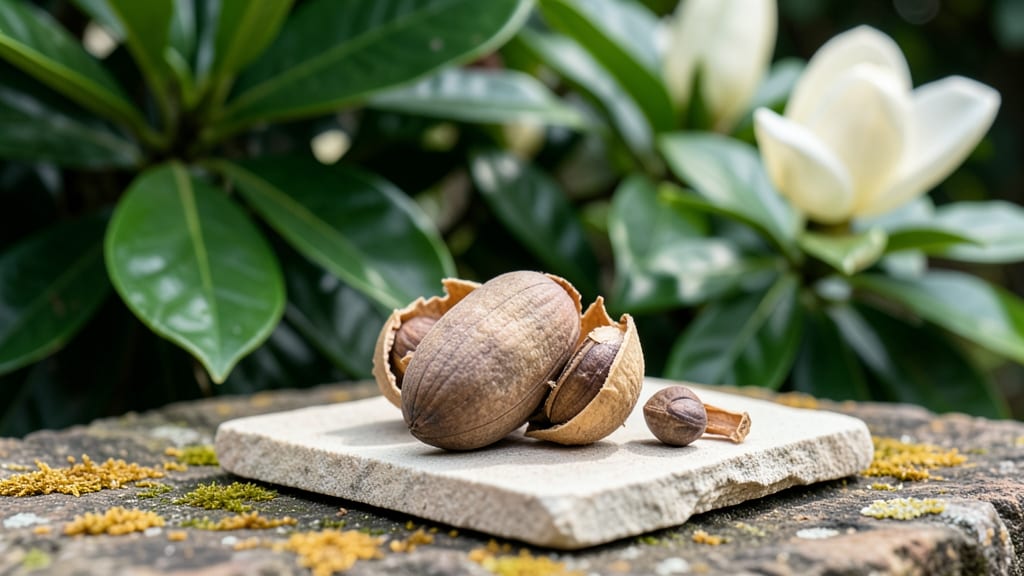
Gardenia seeds look like tiny, oval-shaped capsules about 1–2 inches long, starting green and darkening to brown as they ripen. When you open them, you'll find flat, dark brown or nearly black seeds—roughly the size of sesame seeds—wrapped in a delicate, papery casing.
These seed pods grow directly from gardenia flowers, often appearing after blooms fade. 🌱 The transformation from green to brown signals maturity, but don't rush to harvest—overripe pods may split open naturally, releasing seeds prematurely.
I've found that the best time to collect them is when they turn a rich, chocolate-brown hue and feel slightly soft to the touch, usually 4-6 weeks after flowering.
The seeds themselves are surprisingly small but striking—dark and glossy, almost like tiny beads. Their papery membrane protects them during storage but must be removed before planting. If you're growing gardenias from seed, remember that germination can take 3-6 weeks in warm, humid conditions, so patience is key!
💡 In This Article
- Identifying Mature Gardenia Seed Pods and Their Development Stages
- How to Extract and Store Gardenia Seeds for Germination
Identifying mature gardenia seed pods and their development stages
Gardenia seed pods begin their life as bright green, finger-like protrusions growing from the flower stems. These immature pods are firm to the touch, roughly 1 inch long and 0.5 inches wide, with a smooth, waxy surface that reflects light.
As they mature, they gradually lengthen to 1.5–2 inches while developing a slightly ribbed texture—this is your first visual cue that ripening has begun. The color shift from vibrant green to a muted olive-brown happens over 3–4 weeks, triggered by ethylene gas released as the flower senesces.
The final stage reveals pods with a deep, chocolate-brown hue that feels slightly soft when pressed gently—this is the optimal harvest window. 🌿 Overripe pods may split open naturally, exposing the seeds to pests or drying out, while underripe pods remain hard and green inside.
Think of it like a coffee bean: too early, and it's bitter; too late, and it's stale. The perfect gardenia seed pod should yield slightly when squeezed but not feel mushy, indicating the seeds inside are fully developed and ready for extraction.
Inside these mature pods, you'll find 10–15 flat, disc-shaped seeds arranged in a single layer, each about 0.1–0.15 inches wide—roughly the size of a sesame seed but with a more irregular, slightly elongated shape.
These seeds have a dark brown to nearly black appearance with a faint, glossy sheen, almost like polished river stones. The papery membrane surrounding them isn't just decorative; it regulates moisture loss during the plant's natural drying process, which is why you should never force-open pods before they're fully mature.
What makes gardenia seed maturation fascinating is the botanical mechanism behind the color change. The chlorophyll breaks down as photosynthesis slows in the ripening pod, while anthocyanins (the same pigments found in blueberries) develop, giving that rich brown color.
This process is temperature-dependent—pods mature faster in 75–85°F conditions than in cooler climates. 🌡️ In my experience growing gardenias in Zone 9a, pods ripen about 2 weeks earlier than in Zone 7b, where cooler nights delay maturation.
The texture transformation is equally telling: immature pods have a leathery, water-resistant surface to protect developing seeds, while mature pods develop tiny cracks along their seams—nature's way of signaling it's time to harvest. These cracks allow for controlled moisture release, which is crucial for seed viability.
If you see pods splitting open before they're brown, they've likely been exposed to high humidity or sudden temperature drops, which can reduce germination rates by up to 40%.
For comparison, think of gardenia seed pods versus their relative, the jasmine flower. While jasmine produces tiny, papery seed pods that release seeds almost immediately, gardenia pods are far more durable and designed to stay closed until fully mature.
This structural difference is why gardenia seeds often require stratification (a cold treatment) to break dormancy, while jasmine seeds germinate almost immediately when planted. The patience required to grow gardenias from seed mirrors their reputation as a low-maintenance but slow-growing plant.