
Tools
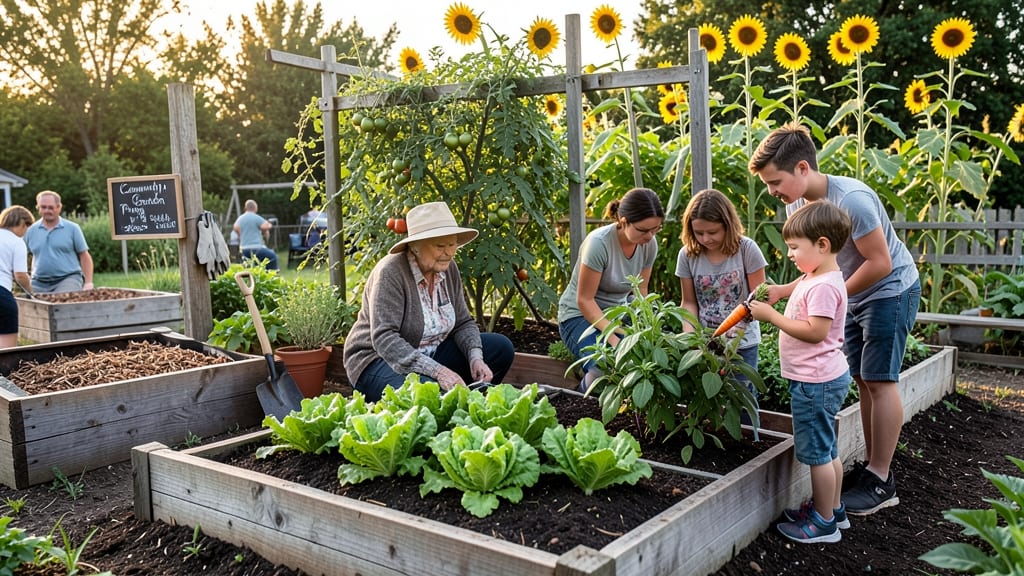
Community gardening is a collaborative effort where groups of people grow vegetables, flowers, and herbs together in shared outdoor spaces, promoting environmental sustainability, stronger community ties, and improved access to fresh produce. These gardens can be found on public or private land and often serve educational purposes.
This shared growing practice goes beyond just planting—it creates a space where neighbors, volunteers, or organizations come together to nurture the land and each other. 🌱 What makes it special is how it tackles multiple challenges at once: reducing food insecurity by growing fresh produce, beautifying urban areas, and even improving mental health through outdoor activity.
Many community gardens also serve as living classrooms, teaching kids and adults about organic farming, composting, and sustainable living.
One of the most powerful aspects is how these gardens break down barriers in neighborhoods. Whether it's a small plot in an apartment complex or a larger urban farm, the shared effort builds trust and camaraderie among participants.
Plus, the food grown is often donated to local food banks or shared among members, making it a win-win for both the community and the environment.
💡 In This Article
- How Community Gardens Strengthen Neighborhoods and Ecosystems
- Starting a Community Garden: Land, Rules, and Volunteer Coordination
How community gardens strengthen neighborhoods and ecosystems
Community gardens create tangible social and environmental benefits by turning underused urban or rural spaces into vibrant hubs of activity. Studies show these shared plots reduce neighborhood crime rates by up to 30% in some areas, according to research from the American Society of Horticultural Science.
The presence of green spaces encourages community members to spend more time outdoors, fostering spontaneous interactions that build trust and reduce social isolation. 🌿 The collective effort required to maintain a garden naturally creates opportunities for collaboration, whether it's dividing tasks like watering, weeding, or harvesting.
The environmental impact is equally significant. A single community garden in a food desert—an area with limited access to fresh produce—can supply enough vegetables to feed 50-100 families annually, depending on its size.
For example, Detroit's urban gardens provide over 10,000 pounds of produce yearly, much of which goes to local food banks. These gardens also reduce food waste by growing only what's needed and composting organic scraps on-site, cutting down on landfill contributions.
The soil itself benefits from organic practices, improving water retention and reducing erosion in urban areas where concrete often dominates.
Mental health improvements are another key benefit. Research from the University of Florida found that gardening reduces cortisol levels—our body's stress hormone—by up to 24% after just 30 minutes of activity.
The combination of physical activity, exposure to sunlight, and the meditative nature of tending plants creates a natural mood booster. For seniors, who often face isolation, community gardens provide structured social interaction and purpose.
Even children benefit from hands-on learning about where food comes from, which studies show increases their willingness to try fresh vegetables by 40%.
One often-overlooked advantage is how these gardens combat urban heat islands—areas where pavement and buildings absorb and re-radiate heat, making cities significantly warmer than surrounding rural areas. A well-maintained garden with mature plants can reduce temperatures by 5-10°F in its immediate vicinity, creating cooler microclimates.
This effect is particularly valuable in densely populated cities where air conditioning use spikes during heatwaves, increasing energy demand. The shade provided by plants also reduces the need for artificial cooling in nearby buildings.
Consider the example of Brooklyn's GreenThumb program, which supports over 500 community gardens across the borough. These gardens have collectively planted 1.2 million trees and shrubs, which absorb 1,500 tons of carbon dioxide annually. The program also runs educational workshops on sustainable practices, reaching thousands of participants each year.
What makes these initiatives successful is their adaptability—whether it's a rooftop garden in Manhattan or a vacant lot transformation in Queens, the core principles of collaboration and sustainability remain the same.
For those starting a community garden, the first step is often securing land—whether through partnerships with local governments, churches, or private landowners. Many cities offer incentives like reduced property taxes for organizations that maintain green spaces.
The key to long-term success lies in creating a structured yet flexible system where everyone, from beginners to experienced gardeners, feels included. Tools like shared digital calendars for workdays and seed libraries ensure resources are accessible to all participants, regardless of their gardening experience.