
Companion Plants
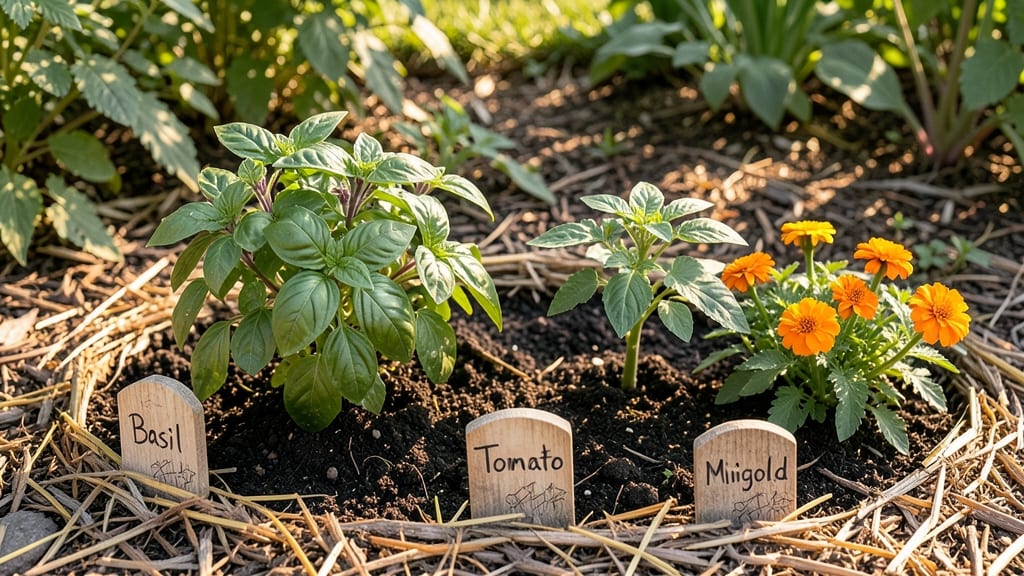
To determine what to plant together in a garden, focus on strategic pairings like marigolds with tomatoes to naturally repel pests or basil with peppers to enhance flavor, while avoiding combos like beans and onions that hinder each other's growth.
Companion planting isn't just about aesthetics—it's a science-backed way to boost your garden's productivity. 🌱 For example, planting nasturtiums near cucumbers can deter squash bugs, while carrots and onions planted together actually improve each other's growth by repelling pests like carrot flies.
The key is understanding which plants share beneficial relationships, like the classic "three sisters" trio of corn, beans, and squash, where each plant supports the others' growth in different ways.
What's fascinating is how some pairings work on a chemical level. Garlic and chives, for instance, release compounds that deter aphids and other pests, making them excellent neighbors for nearly any vegetable.
Meanwhile, lavender planted near roses not only repels pests but also attracts pollinators, creating a balanced ecosystem. The goal is to mimic nature's own diversity—where different species coexist to mutual benefit.
💡 In This Article
- Science-Backed Plant Pairings for Pest Control
- Companion Planting Guide by Garden Type
Science-backed plant pairings for pest control
Companion planting works through chemical and ecological mechanisms. Take marigolds, for instance—they release a compound called α-terthienyl, which disrupts the feeding habits of nematodes and aphids. When planted near tomatoes, this chemical creates a protective barrier that reduces pest damage by up to 70%.
Similarly, garlic emits sulfur-containing compounds that repel aphids and Japanese beetles, making it a powerhouse neighbor for roses or fruit trees. 🌿 The key is selecting plants that either deter pests directly or attract their natural predators, like ladybugs drawn to dill or fennel.
Some pairings go beyond pest control by improving soil health. The three sisters method—corn, beans, and squash—demonstrates this perfectly. Corn stalks provide vertical support for beans, which fix nitrogen in the soil, while squash leaves create a living mulch that suppresses weeds.
This symbiotic relationship reduces the need for synthetic fertilizers and pesticides, creating a closed-loop system. Another example is carrots and onions, which repel each other’s specific pests (carrot flies and onion flies) while sharing similar growing conditions.
For maximum effectiveness, timing matters. Plant basil with tomatoes early in the season to deter whiteflies, but avoid overcrowding—give each plant at least 12-18 inches of space. Similarly, lavender should be placed near roses in late spring when pests like aphids become active.
The scent of lavender’s oils confuses pests while attracting pollinators, creating a dual benefit. 🌸 Even spacing ensures airflow, reducing fungal diseases that thrive in damp, crowded conditions.
Not all pairings are beneficial—some combinations can actually harm each other. For example, beans and onions compete for nutrients, stunting growth, while potatoes and tomatoes (both nightshades) attract the same pests and can spread diseases like blight.
Always research the specific needs of your plants before pairing them. The goal is to create a balanced ecosystem where each plant contributes to the others’ success, not their downfall.
Consider the sensory cues plants use to communicate. Some, like cabbage, release volatile organic compounds when stressed, signaling nearby plants to produce defensive chemicals. This is why rosemary or thyme planted near cabbage can enhance its resistance to cabbage worms.
The interplay of these natural signals is what makes companion planting so effective—it’s not just about proximity, but about creating an environment where plants actively support one another. 🌱
For a hands-on approach, start with a small test plot. Plant nasturtiums around your cucumbers to deter squash bugs, or tuck chives between rows of carrots to repel carrot flies. Observe how the plants interact over time—you’ll quickly notice which pairings thrive and which ones struggle.
This trial-and-error method is how many gardeners perfect their companion planting strategies, combining science with personal experience.