
Container Gardens
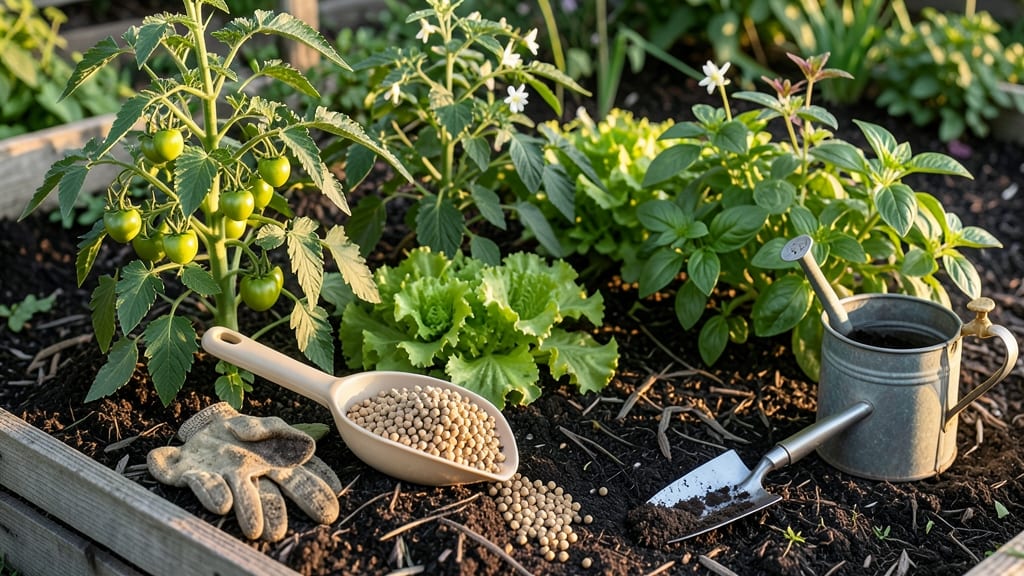
To add fertilizer to your garden, time it with soil test results and plant types—early spring before planting or late winter for cool-season crops, and mid-spring for warm-season varieties. Extreme heat or drought makes fertilization risky for root health.
Soil tests reveal exactly what your plants need, whether it's nitrogen for leafy greens or phosphorus for blooming flowers. 🌱 I've seen gardens transform when we match fertilizer to these specific needs—like adding compost in fall to boost organic matter for next year's growth.
The key is balancing timing with plant cycles: cool-season crops like spinach thrive with winter applications, while tomatoes benefit from a mid-spring feeding when they're establishing roots.
Organic fertilizers like composted manure release nutrients slowly, making them ideal for container gardens where precise control matters. Synthetic options work faster but require more frequent applications—especially during peak growing seasons. Always water before and after fertilizing to help nutrients reach the roots without burning tender foliage.
💡 In This Article
- How Soil Tests Determine Fertilizer Timing
- Seasonal Fertilizer Schedule by Plant Type
How soil tests determine fertilizer timing
Soil tests act like a fingerprint for your garden, revealing exactly what nutrients your plants crave. The three big players—nitrogen (N), phosphorus (P), and potassium (K)—each tell a different story. For example, a nitrogen deficiency shows up as pale, yellowing leaves, while phosphorus starvation means weak roots and poor flowering.
Your test results will show these levels in parts per million (ppm), with ideal ranges like 20-30 ppm nitrogen for leafy greens or 15-20 ppm phosphorus for fruiting plants.
The pH level is equally critical—most vegetables prefer 6.0-7.0, while blueberries need 4.5-5.5. A pH outside these ranges locks out nutrients, making fertilizer applications useless. I once had a tomato bed with stunted growth—turns out the soil pH was 8.2!
After adding sulfur to lower it, the plants responded within weeks with vibrant new leaves. Organic matter percentages (typically 3-5%) also matter—higher levels mean better moisture retention and microbial activity, reducing how often you need to fertilize.
Timing becomes clear when you match these results to plant needs. If your soil test shows low phosphorus, apply a bone meal fertilizer 4-6 weeks before planting—this gives roots time to access the nutrients during their critical growth phase.
For potassium deficiencies, side-dress with greensand or wood ash mid-season to support flowering and fruiting. The key is acting on these results within 2-3 months of testing, before plants start showing stress symptoms.
Don't forget about micronutrients—zinc, iron, and manganese often get overlooked but are crucial for plant health. A soil test might reveal these are deficient even when N-P-K levels look good.
For instance, iron deficiency causes yellowing between leaf veins (interveinal chlorosis), and applying chelated iron can turn things around in 2-3 weeks. The test will specify which micronutrients need attention, often recommending specific amendments like Epsom salt for magnesium or copper sulfate for fungal resistance.
Seasonal timing also plays a role in how you interpret these results. Cool-season crops like kale or spinach benefit from fall applications of compost, which break down over winter to provide spring nutrients.
Meanwhile, warm-season plants like peppers need their fertilizer applied after the last frost when roots are actively growing. This seasonal approach prevents nutrient runoff during heavy rains or leaching in sandy soils, making your fertilizer applications more effective.
What most gardeners miss is how soil texture affects fertilizer timing. Clay soils hold nutrients tightly, so you might need to fertilize less frequently (every 6-8 weeks), while sandy soils release nutrients quickly, requiring more frequent applications (every 3-4 weeks).
Your soil test report will often include this information, helping you adjust your schedule. For container gardens, this becomes even more critical since nutrients wash out faster due to limited soil volume.