
Fertilization
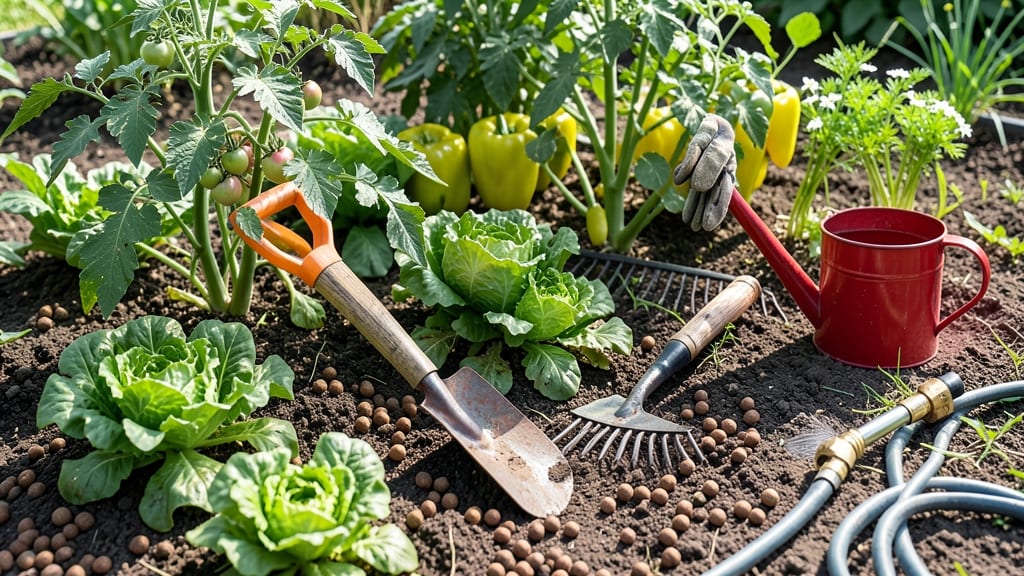
To apply fertilizer to your vegetable garden at the right times means feeding your plants when they actually need it—not before or after they can use it.
Picture this: you’ve just planted your 🥬 vegetable garden after months of planning, and you’re eager to see those first green shoots. But if you fertilize too early, you risk burning tender roots.
Too late, and your plants miss the chance to grow strong. The key? Timing it with their growth stages, not just the calendar.
Most gardeners make one of two mistakes: either they dump fertilizer at planting and assume it’s enough, or they wait until the plants look stressed before acting. Neither approach works.
Instead, we’ll break down the exact moments to feed your garden—from pre-planting prep to the flowering and fruiting phases—so you’re not guessing whether your soil is helping or hurting your harvest.
By the end, you’ll know when to hold off, when to feed lightly, and when to go all in—plus how to adjust for your climate and soil type. Let’s get those plants growing the way they’re meant to.

Fertilizer application timing by vegetable growth stages: pre-planting to harvest
Understanding the growth stages of your vegetables is the key to timely fertilizer application. Each stage—from seedling to fruiting—demands different nutrient ratios to support healthy development. For example, leafy greens like spinach thrive with high nitrogen early on, while tomatoes need a phosphorus boost when flowering begins.
Skipping these adjustments can lead to weak plants or poor yields, no matter how rich your soil appears.
Most gardeners make the mistake of fertilizing once and forgetting—but vegetables need targeted feeding at each phase. The NPK ratio (Nitrogen-Phosphorus-Potassium) should shift as plants mature. For instance, a 10-10-10 fertilizer works well at planting, but switch to a 5-10-10 blend when flowers appear.
This ensures energy goes where it’s needed most: roots, then flowers, then fruit.
| Growth Stage | Fertilizer Type | NPK Ratio | When to Apply | Plant Examples |
|---|---|---|---|---|
| Pre-Planting | Balanced Organic | 5-5-5 or 3-4-6 | 2-4 weeks before planting | Tomatoes, Peppers, Carrots |
| Seedling | High Nitrogen | 10-5-5 or 8-3-9 | At planting + 3 weeks later | Lettuce, Spinach, Kale |
| Vegetative | Balanced | 10-10-10 | Every 4-6 weeks | Cucumbers, Zucchini, Basil |
| Flowering | Phosphorus Boost | 5-10-10 | When buds form | Tomatoes, Peppers, Eggplant |
| Fruiting | Potassium Focus | 2-5-3 or 0-0-50 | Every 3 weeks | Bell Peppers, Tomatoes, Squash |
Let’s break down each growth stage with actionable tips. Start with a pre-planting fertilizer like compost or a balanced organic blend 2-4 weeks before sowing. This jumpstarts root development and ensures nutrients are available when seeds germinate.
For leafy greens, like spinach or kale, focus on nitrogen-rich fertilizers during the seedling stage to encourage lush foliage. Switch to a lower-nitrogen formula once they start bolting.
When plants enter the vegetative stage—characterized by rapid leaf and stem growth—a balanced fertilizer (like 10-10-10) keeps them thriving. Look for dark green leaves and sturdy stems as signs they’re ready for this phase.
For tomatoes and peppers, this is also when you’ll notice the first flower buds forming, signaling it’s time to shift to a phosphorus-heavy fertilizer (e.g., 5-10-10) to support blooming.
During the flowering stage, your plants are energy-hungry. A phosphorus boost (the middle number in NPK) encourages strong root systems and flower production. For tomatoes, this is critical—skipping this step can lead to blossom drop, where flowers fall off before fruiting.
Pair this with a light application of calcium (like crushed eggshells) to prevent blossom end rot, a common
Seasonal and soil-based adjustments: when to fertilize beyond growth stages
Your vegetable garden thrives when fertilizer applications align with seasonal rhythms and soil conditions, not just growth stages. Early spring is prime time for pre-planting soil enrichment, while late summer demands lighter touches to avoid stressing plants before winter.
Regional climate plays a huge role—cool-season crops like kale and carrots benefit from early spring feeding, while heat-loving tomatoes and peppers need mid-season support when flowering begins.
Soil health dictates timing too. If your garden has clay-heavy soil, organic matter like compost should be worked in 6-8 weeks before planting to improve structure. Sandy soils, on the other hand, drain nutrients quickly, so slow-release fertilizers or frequent light applications work best.
Even the most experienced gardeners misjudge timing—like fertilizing too late in the season or skipping post-harvest soil replenishment, which leaves next year’s crops nutrient-depleted.
🌱 PROS-CONS BOX: Organic vs. Synthetic Fertilizer Timing
Organic Fertilizers
Pros
- 🌿 Slow-release nutrients feed plants steadily
- 🌱 Improves soil structure long-term
- 🍅 Best for heavy feeders like tomatoes
Cons
- ⏳ Takes 4-6 weeks to become fully available
- 💧 Requires frequent watering to activate
- 🌡️ Less effective in cold soils (below 50°F)
Synthetic Fertilizers
Pros
- ⚡ Immediate nutrient availability (within hours)
- 📏 Precise NPK ratios for specific needs
- 🌡️ Works in all soil temps
Cons
- 🌱 No soil enrichment—just nutrients
- 🔥 Risk of burn if overapplied
- 💧 Washes out quickly in sandy soils
For organic fertilizers, I recommend a two-step approach: Work compost into beds in early spring, then top-dress with fish emulsion or worm castings when plants are 2-3 inches tall.
Synthetic fertilizers, however, are better suited for mid-season boosts—like when your cucumbers start flowering but fruits aren’t setting. Always pair synthetic feeds with a light watering to prevent root burn.
Regional adjustments matter too. In Zone 5 or colder, I fertilize only in May and June—any later risks stunted growth before frost. Meanwhile, in Zone 8+**, I extend feeding into early October to support winter squash and broccoli maturing before cooler weather.
Post-harvest, I never skip replenishing soil—even if plants are gone, cover crops like clover or vetch fix nitrogen for next season.
Pro tip: Test your soil in early spring and again after harvest. If phosphorus (P) or potassium (K) levels are low, adjust your fall fertilizer blend accordingly.
For example, bone meal (high in P) helps root crops like beets develop better, while kelp meal (high in K) strengthens tomato stems against disease. Small tweaks like these make a huge difference in long-term garden health.
Remember, the best fertilizer schedule is one that adapts to your garden’s needs, not a rigid calendar. Pay attention to leaf color—yellowing signals nitrogen deficiency, while purple stems mean phosphorus is lacking. With practice, you’ll learn to read your soil like a pro. Happy growing! 🌿