
Picking
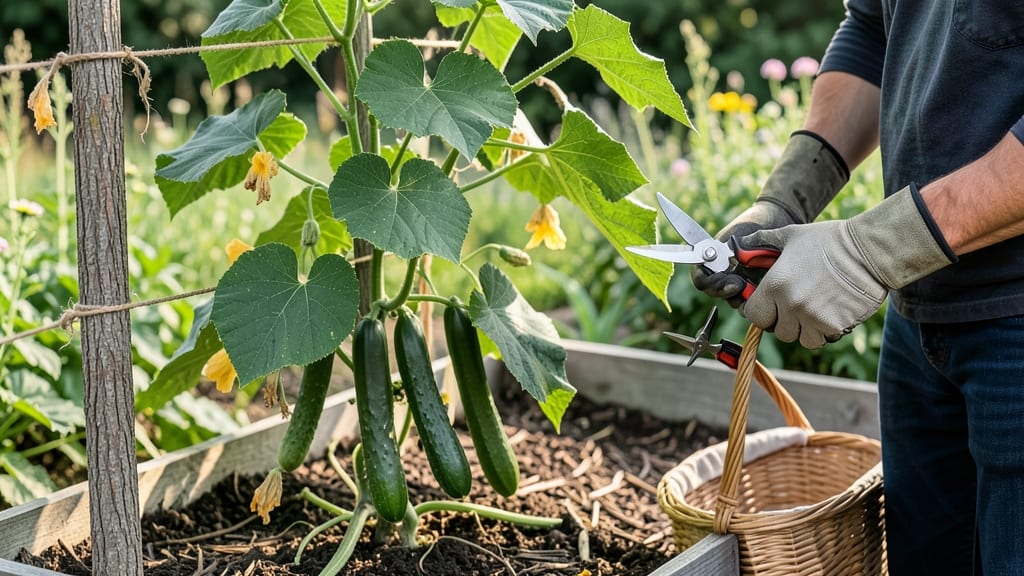
To pick cucumbers from your garden at their peak—when they’re crisp, sweet, and packed with flavor—you’ll need to watch for three key signs: size, color, and a little give when you touch them.
Picture this: you’ve been waiting weeks for that first perfect 🥒, only to bite into one that’s mealy or bitter. That’s what happens when you harvest too early or too late.
The difference between a crunchy victory and a flavorless disappointment comes down to timing—and I’ll show you exactly how to nail it.
Most cucumbers are ready to pick between 60 and 75 days after planting, but variety matters. Slicing types (like ‘Straight Eight’) are best when 6-8 inches long, while pickling cucumbers (like ‘Boston Pickling’) should be smaller—around 3-4 inches.
Climate plays a role too: in warmer zones, cucumbers ripen faster, so you’ll need to check them more often.
In this guide, you’ll learn the three tactile tests to determine ripeness, how to adjust for your local climate, and the biggest mistakes that turn great cucumbers into garden flops. Let’s get started.
3 Tactile tests to determine when cucumbers are ready for harvest
Harvesting cucumbers at the perfect moment transforms your garden into a flavor factory. The key lies in your hands—literally! These three tactile tests let you feel, see, and even hear when cucumbers are ready to pick.
No guesswork, just crisp perfection. I’ve used these methods for years, and they’ve never failed me.
First, understand that cucumbers don’t ripen like tomatoes. They’re best picked at peak freshness, not overripe. The moment you miss it, they turn mealy or bitter. That’s why these hands-on checks are game-changers. You’ll know exactly when to snip that vine and celebrate your harvest.
-
Test 1: The Size Check
Measure cucumbers at 6-8 inches for slicing types. For pickling varieties, aim for 2-3 inches. Use a ruler or your hand as a guide—most cucumbers should fit between your thumb and pinky when held vertically. -
Test 2: The Thumbnail Press
Gently press your thumbnail into the cucumber’s skin. If it resists slightly but doesn’t dent deeply, it’s ready. A hard cucumber needs more time, while one that bruises easily is overripe. -
Test 3: The Stem Snap
Grasp the cucumber’s stem and bend it gently. If it snaps cleanly near the vine, that’s your cue to harvest. A stubborn stem means it’s not ready yet.
Let’s break down why these tests work. The size check ensures you’re not picking too early (small cucumbers taste bland) or too late (large ones lose crispness). I once waited too long and ended up with cucumbers so big they were practically water balloons—not ideal for slicing salads!
The thumbnail press reveals the cucumber’s internal firmness without damaging it. Overripe cucumbers feel soft and spongy, while underripe ones are rock-hard. This test is my go-to for heirloom varieties, which can vary widely in texture.
Pro tip: Do this test in the morning when cucumbers are coolest for the most accurate reading.
Don’t overlook the stem snap test. This one’s a bit dramatic—you’ll hear a satisfying pop when it’s ready. The stem’s separation from the vine signals the cucumber has reached its sugar peak.
I’ve seen gardeners miss this cue and end up with bitter cucumbers. Trust me, your taste buds will thank you for listening to that little snap!
Bonus: Pay attention to color consistency. Ready-to-pick cucumbers should have a deep, even hue—no pale patches or yellowing. For slicing types, look for a yellowing stem end, which indicates full maturity.
Pickling cucumbers, however, stay green all the way to harvest. Varieties like Boston Pickling are exceptions to the rule.
Now, what if you’re unsure? Here’s my fail-safe: Pick a cucumber that’s 70% of the way to your variety’s ideal size. For example, if your slicing cucumbers should be 8 inches, harvest at 5-6 inches.
This “early harvest” strategy keeps your plants producing while giving you a buffer for perfect timing. It’s worked for me in both hot summers and cool springs.
One common mistake? Waiting for cucumbers to turn yellow. While some varieties do yellow at the stem end, most slicing cucumbers are best picked before they start yellowing. Overripe cucumbers develop a waxy texture and lose their sweetness.
I’ve learned this the hard way—once, I let a batch get too ripe, and they tasted like sad, watery sponges. Yikes!
Pro move: Harvest in the morning when cucumbers are cool and crisp. This gives you the best flavor and texture. Plus, it’s easier to spot ripe cucumbers when they’re not wilting in the afternoon heat.
Grab a basket, some pruning shears, and get ready to transform your garden into a cucumber paradise.
Remember, the more you practice these tests, the more intuitive they become. Soon, you’ll glance at your cucumber plants and instantly know which ones are ready. Happy harvesting—your salads (and taste buds) will thank you! 🥒
Best practices for harvesting cucumbers to maximize yield and flavor
Harvesting cucumbers at the right time isn’t just about size—it’s about preserving flavor and encouraging continuous production. When you pick too early, you lose sweetness and crunch; too late, and they turn bitter or seedy.
The key is consistent monitoring and gentle handling to avoid damaging your vining plants.
Start by checking cucumbers every 2-3 days once they begin flowering. Most varieties reach harvest readiness in 50-75 days, but heirloom types may take longer. The best time to harvest is morning, when temperatures are cooler and cucumbers are crispest.
Avoid picking after midday heat, as this can cause wilting or sunburn.
🌱 Pro Tip: When to Pick Cucumbers
Harvest cucumbers when they reach 60-75% of their mature size for slicing varieties. For pickling types, aim for 3-4 inches—smaller means more crunch. Use these cues:
- Color: Deep, even green or variety-specific hue (no yellowing for slicing types)
- Texture: Skin resists gentle thumb pressure but yields slightly
- Stem: Snaps cleanly when bent (indicates maturity)
💡 Warning: Overripe cucumbers develop a yellowed stem end and bitter taste.
Use a sharp pair of pruning shears or your fingers to harvest cucumbers. For vining varieties, grasp the cucumber firmly near the stem and twist gently.
Avoid pulling—this can uproot young plants or damage fruit-bearing nodes. For bush varieties, snip the stem just above a leaf node to encourage new growth.
Frequency is critical: pick cucumbers 2-3 times per week to stimulate more production. Neglecting harvests leads to overcrowded vines, which stress the plant and reduce yield. Heirloom varieties often produce fewer but larger cucumbers, so harvest them less frequently—once every 5-7 days—to maintain quality.
Store harvested cucumbers in a cool, dark place (50-55°F) for up to 7 days. Wrap them in a damp paper towel inside a plastic bag to retain moisture. For long-term storage, refrigerate whole cucumbers (not sliced)—this preserves crispness and sweetness for up to 2 weeks.
Avoid storing near ethylene-producing fruits like apples or bananas, as they accelerate spoilage.
After harvesting, inspect your plants for pests or diseases. Remove any yellowed leaves or damaged fruit immediately to prevent spread. Prune overgrown vines to improve airflow and redirect energy to fruit production.
With proper care, a single cucumber plant can yield 10-20 cucumbers per season—so keep those shears handy! 🌿