
Planting
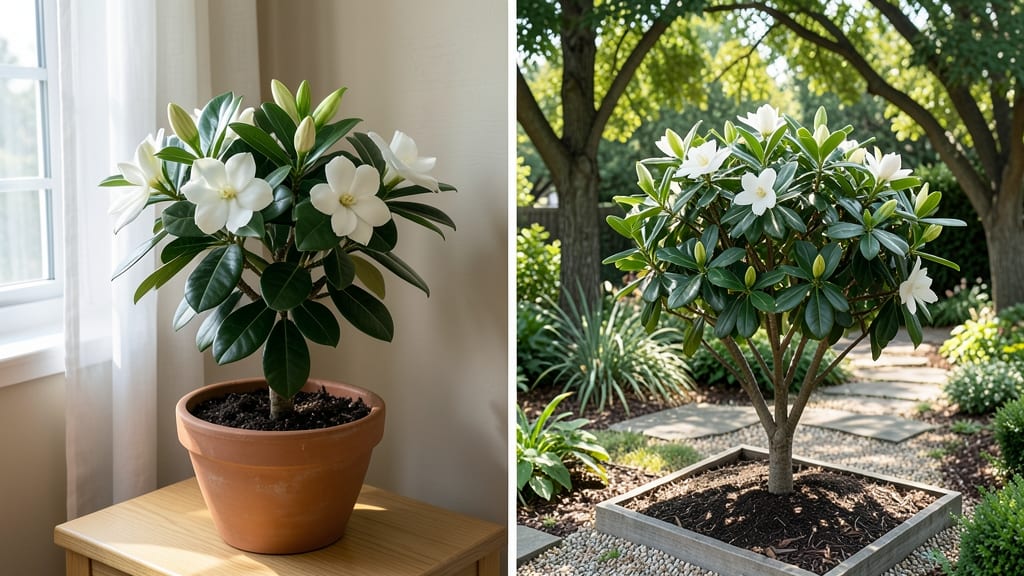
Gardenia plants can grow successfully both indoors and outdoors, but outdoor gardenias develop richer fragrance and larger flowers when exposed to natural sunlight and humidity, while indoor gardenias need bright, indirect light and consistent moisture to mimic outdoor conditions.
Outdoor gardenias love 6+ hours of sunlight daily and thrive in 60-75°F temperatures, which boost their natural oils for that signature sweet scent. 🌿 Meanwhile, indoor plants need bright indirect light (like an east-facing window) and 60%+ humidity to prevent bud drop—a common frustration for beginners.
The key difference? Outdoor plants get natural humidity from rain and soil moisture, while indoor gardenias often need pebble trays or humidifiers to replicate these conditions.
For maximum blooms, outdoor gardenias benefit from seasonal pruning after flowering, while indoor plants should be repotted every 2-3 years to refresh soil nutrients. Both types prefer acidic soil (pH 5.5-6.5), but outdoor plants can tolerate slightly wider ranges.
The trade-off? Outdoor gardenias grow faster but may face pests, while indoor plants stay pest-free but require more attention to light and moisture.
💡 In This Article
- Climate and Light Requirements for Gardenia Growth
- Indoor vs Outdoor Gardening Tips for Maximum Blooms
Climate and light requirements for gardenia growth
Outdoor gardenias thrive in tropical and subtropical climates where they receive 6-8 hours of direct sunlight daily, but they can tolerate 4-6 hours in cooler regions. The key is morning sun exposure to prevent leaf scorch, as afternoon heat can stress the plant.
This sunlight triggers photosynthesis, which fuels the production of essential oils responsible for gardenias' signature fragrance. In contrast, indoor gardenias need bright indirect light—like an east-facing window—to prevent leaf burn while still providing enough energy for growth.
The ideal temperature range for gardenias is 60-75°F, with nighttime temperatures never dropping below 55°F. Outdoor plants naturally adapt to seasonal changes, but indoor gardenias can suffer in dry, heated homes where temperatures fluctuate.
Humidity plays a critical role: outdoor plants benefit from natural moisture in the air and soil, while indoor plants often need 60%+ humidity to prevent bud drop—a common issue when buds form but fail to open. 💧 This is why you'll see more blooms outdoors, as the plant's natural environment supports all growth stages.
Soil acidity is another critical factor, with gardenias preferring pH 5.5-6.5. Outdoor plants often have naturally acidic soil, especially in regions with pine forests or acidic rainfall.
Indoors, you'll need to use a peat-based or pine bark mix and occasionally amend with sulfur to maintain the right pH. The soil's acidity affects nutrient uptake, particularly iron and manganese, which are vital for flower production. Without proper acidity, even well-watered plants may struggle to bloom.
Outdoor gardenias also benefit from natural rainfall patterns, which provide consistent moisture without over-saturating the roots. Indoors, you'll need to water when the top 1-2 inches of soil feel dry, using room-temperature water to avoid shocking the roots.
The difference in watering needs stems from how outdoor plants can access deeper moisture through natural rainfall cycles, while indoor plants rely entirely on your watering schedule. 🌧️ This is why indoor gardenias often require more frequent monitoring to prevent both underwatering and root rot.
One often-overlooked factor is air circulation. Outdoor gardenias get natural airflow from breezes, which helps prevent fungal diseases like powdery mildew. Indoors, you'll need to use a small fan on low setting near the plant or place it in a spot with gentle air movement.
Proper circulation ensures that the plant's leaves dry quickly after watering, reducing the risk of mold. This attention to airflow is particularly important for indoor gardenias, as stagnant air can create the perfect environment for pests and diseases.
Seasonal changes also impact gardenias differently indoors versus outdoors. Outdoor plants experience natural dormancy in cooler months, while indoor plants may continue growing year-round if conditions are right. This means indoor gardenias need consistent care throughout the year, including adjusted light sources during winter months when natural light is scarce.
Understanding these seasonal differences helps explain why outdoor gardenias often produce larger blooms—they go through natural cycles of growth and rest that indoor plants may miss.