
Watering
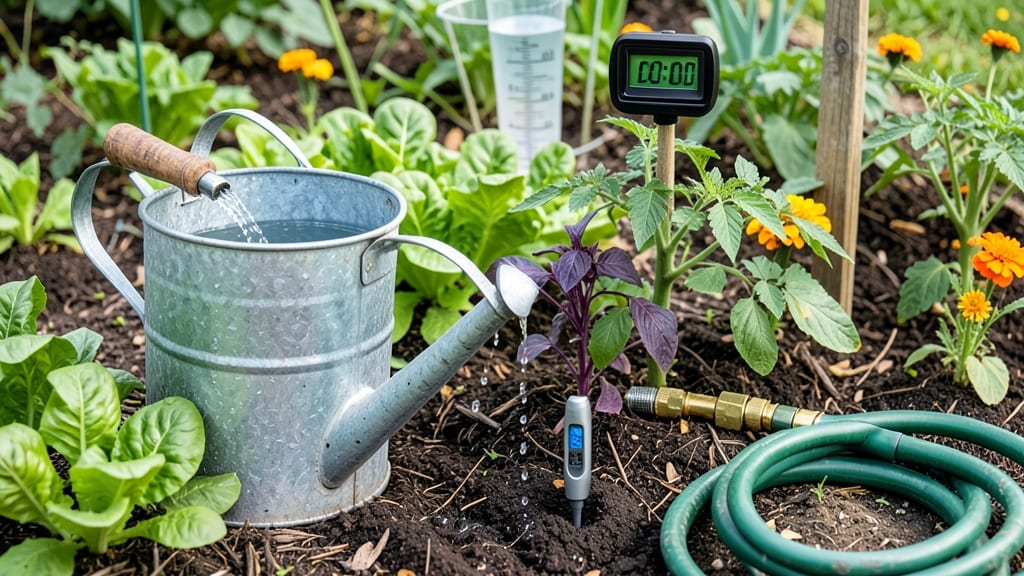
Watering your garden for 1 to 1.5 inches per week is ideal, but adjust based on soil—sandy soils need shorter, more frequent sessions (2-3 times weekly) while clay soils hold moisture longer, requiring less frequent but deeper watering. Timing matters too: morning watering minimizes evaporation and fungal growth.
Your garden's soil type determines how long and how often you should water. Sandy soils drain quickly, so they need shorter watering sessions every 2-3 days to keep roots hydrated without runoff.
Clay soils, on the other hand, retain moisture for days, so longer, less frequent watering (once every 7-10 days) works best. Loam—ideal garden soil—falls somewhere in between, typically needing 1 inch of water every 5-7 days.
Pay attention to plant wilting or yellowing leaves, which signal whether you're over- or under-watering. 💧
Beyond soil, consider your plants' needs and seasonal changes. Drought-resistant succulents thrive with minimal watering (every 2-3 weeks), while thirsty vegetables like lettuce may need daily watering in summer heat. Mulching with organic materials helps retain moisture, reducing how often you need to water.
For efficiency, use drip irrigation systems or smart timers to deliver consistent moisture without waste. Adjusting your approach based on these factors ensures healthier plants and less water waste.
💡 In This Article
- Soil Type and Watering Duration Guidelines
- Adjusting Watering for Plant Types and Seasons
Soil type and watering duration guidelines
Your garden's soil composition fundamentally dictates watering needs because it determines how quickly moisture drains or lingers. Sandy soils, made up of large particles, drain water within 30-60 minutes after watering, so they require shorter sessions (10-15 minutes) every 2-3 days to prevent root dehydration.
The coarse texture creates large air pockets that don't retain water, forcing roots to seek moisture near the surface. In contrast, clay soils with tiny particles hold water like a sponge, often for 7-10 days, making them ideal for longer, less frequent watering (30-45 minutes once weekly). 💧
The middle ground comes with loam soils—ideal garden soil with balanced sand, silt, and clay. These retain moisture for 5-7 days while allowing proper drainage, typically needing 1 inch of water every 5-7 days.
To test your soil's drainage, perform a simple "percolation test": Dig a 6-inch hole, fill it with water, and time how long it takes to drain. Sandy soils drain in under 1 hour, clay in over 6 hours, and loam falls between 2-6 hours.
This helps you calibrate your watering schedule precisely.
Watch your plants for visual cues about over- or under-watering. Wilting leaves that recover after watering signal thirst, while yellowing leaves or mold growth indicate excess moisture. Sandy soils often show runoff within minutes of watering, while clay soils may develop hard, cracked surfaces when dry.
Adjusting your approach based on these signs prevents stress—roots in sandy soil need frequent hydration, while clay-bound roots can suffocate if overwatered. 🌱
Root depth plays a crucial role too. Plants in sandy soils develop shallow root systems because moisture disappears quickly, while clay soils encourage deeper roots that search for water below the surface.
This is why vegetables like carrots or potatoes (which need deep soil penetration) thrive in loam or clay, while shallow-rooted herbs like basil prefer sandy or loamy mixes. Understanding this relationship helps you match plant types to soil conditions for optimal growth.
Consider this real-world example: A tomato plant in sandy soil may need 15 minutes of watering every 2 days in summer, while the same plant in clay soil could thrive with 30 minutes once weekly. The key difference is how long the water stays available to roots.
Using a rain gauge or tuna can buried halfway in soil helps track actual moisture levels—aim for 1-1.5 inches per week, adjusting for rainfall. This precision prevents both drought stress and root rot. ✨