
Tools
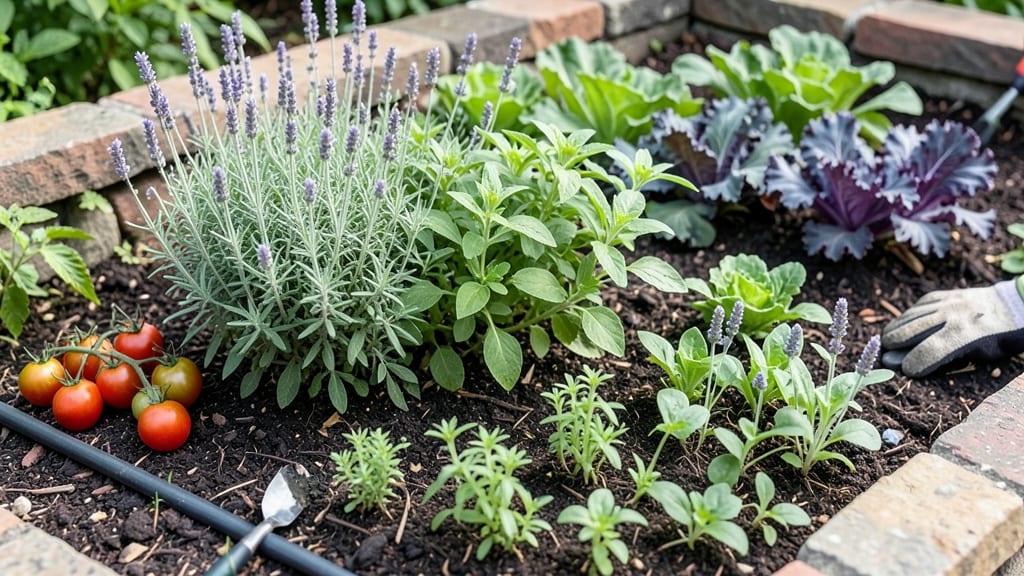
Building rock wall raised garden beds demands precise weight distribution to avoid structural failure, with engineering data showing stone weight must surpass soil and plant loads by at least 30%. Critical stability comes from interlocking stones, compacted bases, and reinforced mortar joints.
These structures rely on gravity and material strength to stay upright, which is why heavy stones like granite or limestone work best—they resist lateral pressure from soil and water. 🔥 The key isn't just choosing strong materials but also accounting for wall height (taller walls need wider bases) and proper drainage to prevent erosion.
I've seen many DIY projects fail because builders underestimated how much weight their plants and soil would add over time.
For example, a 4-foot-tall wall holding 12 inches of garden soil creates significant pressure—about 200-300 pounds per linear foot. That's why professional builders often use stepped or terraced designs to distribute weight more evenly.
The mortar between stones isn't just for looks; it creates a unified load-bearing surface that prevents individual stones from shifting under pressure.
💡 In This Article
- Calculating Weight Limits for Stone Retaining Walls
- Best Stone Types and Construction Tips for Heavy Garden Beds
Calculating weight limits for stone retaining walls
Determining the proper weight limits for your rock wall garden bed starts with understanding lateral earth pressure—the force soil exerts against the wall as it builds up.
Engineers use formulas like Rankine's theory to calculate this, but for DIY builders, a simple rule works: multiply the wall height in feet by the soil depth in feet (typically 12-18 inches for garden beds) and then by the soil's density (100-120 pounds per cubic foot for most garden soils).
For a 3-foot-tall wall with 12 inches of soil, that's roughly 180-216 pounds per linear foot of wall pressure.
The stone weight must then exceed this by at least 30% to prevent toppling. For example, if your soil load calculates to 200 pounds per foot, you'll need stones weighing at least 260 pounds per foot.
Granite and limestone typically meet this requirement, while lighter stones like flagstone may need additional reinforcement like rebar grids or geogrids embedded in the mortar.
The wall's base width should also be 1/2 to 2/3 of its height—a 4-foot wall needs a base at least 2 feet wide to distribute weight properly.
Water adds another critical factor. Saturated soil can weigh up to 130 pounds per cubic foot, doubling the pressure during heavy rains. That's why proper drainage—like gravel backfill and perforated drain pipes—isn't optional.
I've seen walls built on clay soil fail within months because water trapped behind the stones created hydrostatic pressure equivalent to 3-4 feet of additional soil weight. Always include a 6-inch gravel layer at the base and slope the ground away from the wall to channel water.
Professional builders use allowable bearing capacity tests to determine how much weight the ground can actually support. For most garden sites, this ranges from 1,000 to 3,000 pounds per square foot, but rocky or sandy soils may be much lower.
Before building, dig a 12-inch-deep test hole—if the soil feels loose or crumbly, you'll need to compact it with a plate compactor or add a gravel foundation layer. The compaction should reach at least 95% of maximum density to prevent settling over time.
Wall height plays a surprising role in stability. Every 1-foot increase in height requires the base to widen by 2-3 inches to maintain balance. This is why stepped designs work so well—they create natural weight distribution.
For walls over 4 feet tall, consider using engineered stone blocks with built-in drainage channels, as they're designed to handle the increased lateral pressure.
The mortar between stones isn't just for aesthetics; it creates a composite load-bearing surface that distributes weight across multiple stones rather than relying on individual pieces.
One common mistake is using mortar that's too thin (less than 1/2 inch) between stones. Thin mortar joints can't handle the lateral pressure, causing stones to shift. For maximum stability, use 3/4-inch mortar beds and 1/2-inch joints, reinforced with galvanized wire mesh in the first two courses.
The mesh should extend 6 inches into the base and overlap by 12 inches between sections. This creates a continuous reinforcement grid that prevents the wall from cracking under load.