
Watering
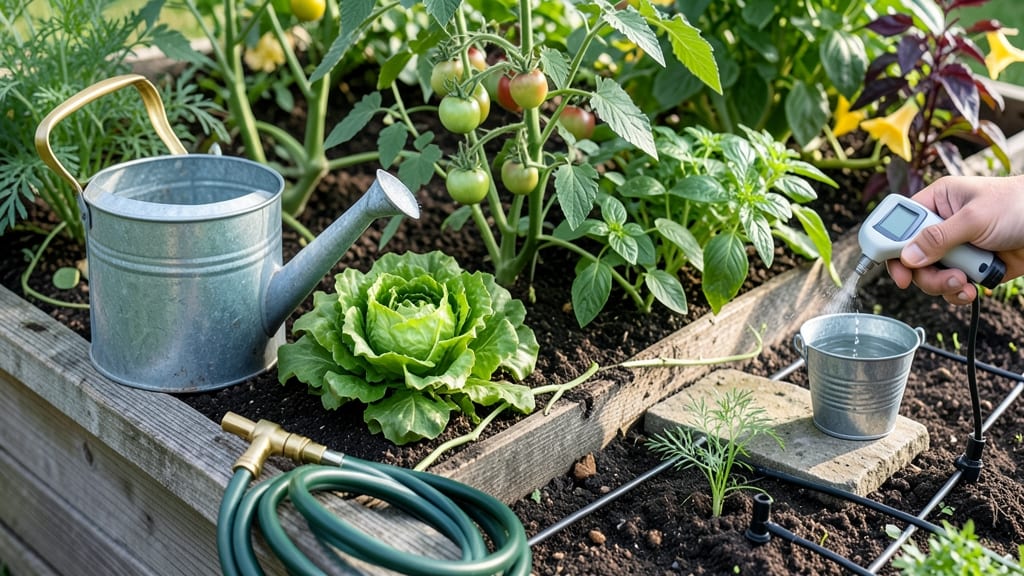
Watering your vegetable garden every day can actually harm your 🥬 harvest more than help it, depending on soil, weather, and the plants you’re growing.
Overwatering your vegetable garden can drown plant roots and invite pests—yet many gardeners still wonder if daily watering is the key to a thriving harvest. The truth lies in understanding plant needs, soil types, and weather conditions to create a watering schedule that works for your garden, not against it.
Leafy greens like lettuce and spinach may handle more frequent watering, while root crops like carrots or potatoes need deep, less frequent soaks to develop properly.
In USDA Zone 6a, where spring planting kicks off in April, the key is checking soil moisture before deciding whether to water at all.
Below, I’ll break down how to adjust your routine based on plant type, season, and signs your garden is getting too much—or too little—water. You’ll learn smart scheduling tricks that save time, conserve water, and keep your harvest bountiful.
How often should you water vegetable gardens based on plant type?
Watering your vegetable garden isn't a one-size-fits-all task—each plant type has unique needs that dictate how often you should water. Leafy greens like lettuce or spinach thrive with consistent moisture, while root crops such as carrots need less frequent but deeper watering.
Understanding these differences prevents overwatering, which can suffocate roots, or underwatering, which stresses plants. Let’s break down the ideal watering schedule for common vegetable categories and how to adjust for containers versus in-ground beds.
For leafy greens, shallow roots mean they need frequent watering—about every 1-2 days during hot weather, but they’re sensitive to soggy soil. Fruiting plants like tomatoes or peppers, on the other hand, require deep watering every 2-3 days to encourage strong root systems and fruit development.
Meanwhile, root vegetables such as potatoes or beets prefer infrequent but thorough watering to avoid splitting or deformities. Adjusting for container gardens is critical, too, as they dry out faster than in-ground beds.
🌱 Here’s a quick reference: Most vegetables need 1-2 inches of water per week, but the frequency depends on soil type, weather, and plant stage. Sandy soil drains quickly, while clay holds moisture longer. Containers may need daily watering in summer, while in-ground beds might only require watering every 3-4 days. Always check soil moisture 1 inch below the surface—if it’s dry, it’s time to water.
When watering leafy greens, focus on keeping the soil evenly moist but never waterlogged. These plants grow quickly and need consistent hydration to prevent bolting (premature flowering). Use a fine mist or drip irrigation to avoid disturbing the shallow roots.
For fruiting plants, deep watering encourages roots to grow downward, making plants more drought-resistant. Water at the base of the plant in the morning to reduce fungal diseases like powdery mildew.
Root crops like carrots and potatoes are particularly finicky about watering. Too much water can cause them to split, while too little leads to woody or misshapen produce. Deep watering every 3-4 days is ideal, but always adjust based on rainfall.
If you’re growing these in containers, ensure the pots have drainage holes and use a well-draining soil mix to prevent root rot. Mulching around the base helps retain moisture and keeps soil temperatures stable.
Herbs like basil and parsley strike a balance between leafy greens and fruiting plants. They prefer moderate moisture—watering every 2-3 days keeps them thriving without over-saturating the soil.
Containers dry out faster, so check the soil daily during heatwaves. Legumes, such as beans and peas, are more drought-tolerant once established but still need deep watering every 3-5 days to support pod development. Avoid wetting the foliage to prevent diseases like rust.
Adjusting for container gardens is one of the biggest challenges for gardeners. Pots and raised beds heat up faster and lose moisture quicker than in-ground soil. If you’re growing vegetables in containers, consider using self-watering pots or drip irrigation systems to maintain consistent moisture.
Group containers together to create a microclimate that retains humidity. For in-ground gardens, mulch heavily around plants to slow evaporation and keep roots cool.
Seasonal changes also play a huge role in watering frequency. In summer, most vegetables will need watering every 1-2 days, while in spring and fall, you can stretch it to every 3-4 days.
During winter, reduce watering significantly—most vegetables enter dormancy and only need occasional moisture to survive. Always monitor the weather: after a heavy rain, skip watering for a few days to avoid over-saturating the soil.
One common mistake is assuming that daily watering is always better. While it might seem like more water equals healthier plants, overwatering leads to root rot, fungal infections, and nutrient leaching. Instead, focus on deep, infrequent watering that encourages strong root systems.
Use a moisture meter or the finger test (stick your finger 1 inch into the soil) to gauge when it’s time to water. This simple check saves time and keeps your garden thriving.
Finally, tailor your watering routine to the growth stage of your plants. Seedlings need frequent misting to keep soil moist, while mature plants can handle longer intervals between waterings. Pay attention to visual cues
Signs of overwatering vs. underwatering: what your plants are really telling you
Your vegetable garden might be screaming for help—but you’re not listening. Yellowing leaves, mushy stems, or wilting despite damp soil are all red flags. The problem? Many gardeners assume "more water = better growth," but overwatering suffocates roots just as much as underwatering.
Let’s decode what your plants are really saying before it’s too late.
Start by checking the soil moisture 1-2 inches deep. Stick your finger in—if it’s soggy, you’re overdoing it. Clay soil stays wet longer, while sandy soil drains fast. Even daily watering can drown roots if your garden lacks proper drainage.
Pay attention to leaf color: yellowing with crisp edges? That’s thirst. Yellowing with a mushy feel? You’re drowning them.
Overwatering creates the perfect storm for fungal diseases like powdery mildew or root rot. Look for white mold on leaves or a foul smell near the soil. Underwatering, on the other hand, causes drooping leaves that stay wilted even after watering—this is irreversible damage if ignored. Both problems start with the same symptom: stressed plants that can’t tell you what’s wrong.
Overwatering
Underwatering
For leafy greens like spinach or kale, underwatering turns leaves crispy at the edges. But overwatering causes them to yellow and drop. Root vegetables like carrots or beets?
They’ll split if soil is too wet. Fruiting plants like tomatoes or peppers wilt dramatically when thirsty but develop blossom end rot (black spots) if overwatered.
Here’s my quick test: Lift a plant gently. If it pulls out easily, roots are rotting from overwatering. If soil clumps tightly around roots, it’s underwatered. Adjust your routine immediately—daily watering isn’t a one-size-fits-all fix. Use a moisture meter ($10 at garden centers) to stop guessing.
Remember: Healthy soil is your best tool. Amend with compost to improve drainage, and always water at the base of plants, not the leaves. Your veggies will thank you with vibrant growth—not wilting or mold. 🌱